
Devinder Sandhu, Senior Health and Science Editor.
You are standing at the bathroom mirror at eleven at night, mascara half off, and the bottle of micellar water someone recommended sits capped on the shelf next to two others you tried and abandoned. None of them felt like they did much. That is usually a technique problem, not a formula problem. The single most useful fact about micellar water is this: how you use it changes what actually comes off your face far more than which bottle you bought. This guide walks through what the product is actually doing on your skin, where beginners go wrong, and how to judge whether it is working for you at all.
- Technique decides the outcome more than the formula does. Dwell time and gentle strokes matter more than brand or price.
- Micellar water is a first step, not a finish, for most made-up faces. Heavy SPF and long-wear makeup usually need a second cleanse.
- Skin type decides whether you need this step at all. Bare-faced days and reactive skin call for a different routine than a full face of makeup.
How Micelles Actually Lift Makeup And Oil
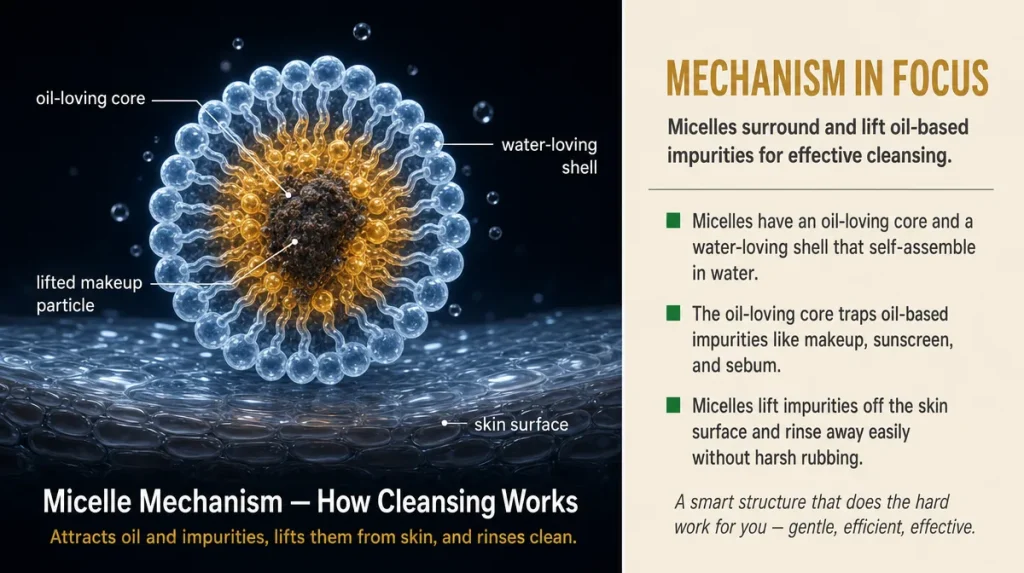
Micellar water gets its name from micelles: tiny clusters of surfactant molecules that form when the right ingredients meet water in the right ratio. Picture a bag of marbles with sticky centres and slippery skins. In micellar water, the sticky centre is oil-loving and the slippery outside is water-loving. Dropped onto skin, these clusters surround makeup, sebum and sunscreen the way a fishing net gathers debris pulled through water, then lift it away without needing friction.
A 2019 study in the International Journal of Cosmetic Science described this mechanism in low-surfactant-concentration formulas: the clusters bind lipid-soluble residue while leaving the skin’s surface pH largely undisturbed, which is part of why the product feels gentler than a foaming cleanser on first use.
This explains almost everything about how to use one well. Because the cleansing power comes from those micelle clusters working, not from scrubbing, rubbing hard actually works against the product. It pulls debris back into the skin instead of lifting it off the surface. The clusters need contact time, not force.
It also explains the limits. Once the micelles in a given amount of liquid are saturated with oil and pigment, they stop cleansing efficiently. A single, overused pad dragged across a full face of makeup is asking exhausted micelles to do a second job they cannot do.
Deciding Whether Your Skin Needs This Step At All
Micellar water solves a specific problem: makeup, SPF and daily grime that build up on the surface without much surfactant needed to move them. It is not a treatment and it is not designed to clean deep into pores the way a proper cleanse does.
People with light daily makeup, or none, often find a gentle foaming or cream cleanser does the job on its own, with micellar water reserved for eye makeup removal or travel days without running water.
People who wear a full face, including waterproof mascara or long-wear foundation, tend to benefit most from micellar water as a first pass before a proper cleanser. The Canadian Dermatology Association’s general public guidance on cleansing recommends removing makeup thoroughly before bed regardless of method, noting that leftover residue can contribute to clogged pores and irritation over time.
Skin that runs dry, sensitive or reactive should look at what is left in the formula after the surfactant does its work. Some micellar waters carry alcohol or fragrance for a fresh feel, which can sting on a compromised barrier. If your skin flushes or tightens within minutes of use, that is useful information, not a reason to push through.
The Wipe That Undoes The Point Of The Product
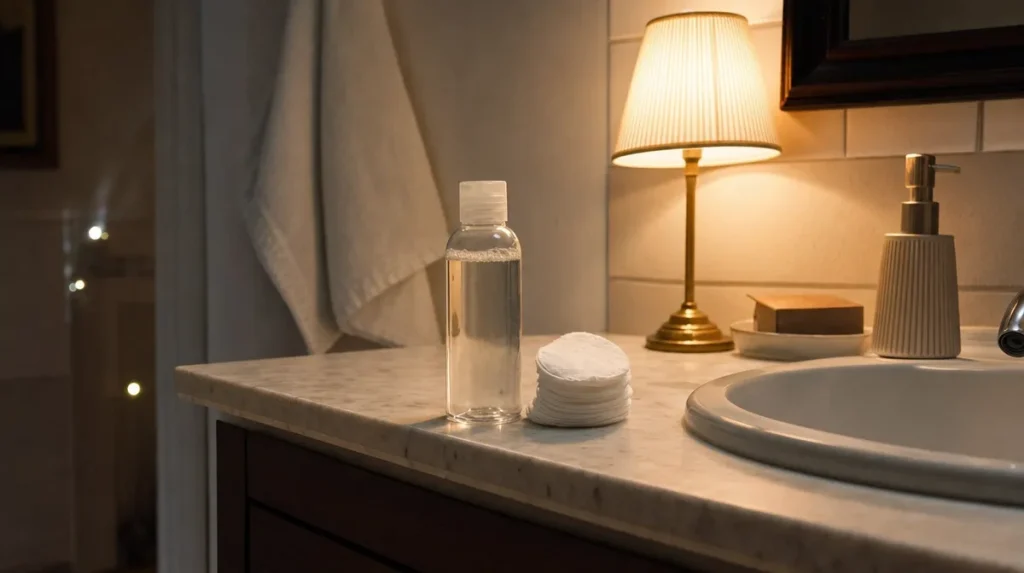
The biggest mistake beginners make is treating micellar water like a makeup wipe: swipe, scrub, done. That habit comes from convenience, not from how the chemistry actually works.
The better method: soak a cotton pad generously, rather than a quick spritz, and hold it against closed eyes or a section of face for three to five seconds before moving. That dwell time gives the micelles a chance to surround the residue instead of smearing it around.
Move in gentle strokes, not circles, and switch to a fresh section of the pad, or a new pad, once one side looks visibly soiled. A grey, saturated pad dragged across the whole face is redistributing debris, not removing it.
The second common mistake is skipping the rinse entirely because the bottle says no rinse required. That claim is about the base formula being mild enough to leave on skin, not a guarantee that every trace of lifted oil should sit there overnight. Dermatologists writing in consumer guidance columns for outlets such as Chatelaine have suggested a final rinse or a light second cleanse, especially for skin prone to breakouts, since leftover surfactant residue can sit in pores overnight.
Reading An Ingredient List Without A Chemistry Degree
Ingredient lists on micellar water bottles read like alphabet soup, and most of what matters is buried behind marketing language on the front label.
Two things worth checking. First, the surfactant itself: mild ones such as poloxamers or sugar-derived surfactants tend to be gentler than sulfates, which do appear in some cheaper formulas despite gentle branding. Second, what follows the surfactant on the list: glycerin and panthenol suggest an attempt to offset the drying effect of cleansing, while a high position for alcohol denat or fragrance is worth noting if your skin is reactive.
Words like purifying, micro-cleansing or skin-loving on the front of a bottle describe nothing measurable. Beauty editors at ELLE Canada and other titles have long pointed out that front-label language is written by marketing teams, not formulators, and tells you almost nothing about what is actually inside.
A genuinely useful habit: flip the bottle before you buy, read the first five ingredients, and compare that list to whatever you currently use and like. If the surfactant and the first few supporting ingredients are similar, the new bottle will likely feel similar on skin, whatever the label promises.
Why One Pass Is Rarely Enough For Makeup Or SPF
Sunscreen formulated to resist water and sweat is, by design, harder to remove with a single light pass of any cleanser, including micellar water.
This is where double cleansing earns its place, not as a trend but as a practical response to modern SPF and long-wear makeup chemistry. The method: a first cleanse, often micellar water or a light oil, to break down sunscreen and makeup, followed by a second cleanse with a standard face wash to remove what the first step loosened along with any surfactant residue.
A 2021 review in the Journal of Cosmetic Dermatology examining sunscreen removal methods found that a single cleanse with a mild surfactant left measurable residue on skin swabs compared with a two-step approach, particularly with mineral and water-resistant formulas.
None of this means everyone needs two steps every night. A bare-faced day barely needs one gentle cleanse. A day that included SPF 50, foundation and setting spray is a different chemical situation on skin, and treating both days the same with one swipe of micellar water is where most complaints of skin still feeling dirty tend to come from.
What Changes In A Week, And What To Watch For Instead
Micellar water is a cleansing step, not an active treatment, so the results worth tracking differ from what you would expect from a serum or exfoliant.
In the first few days, watch for how skin feels immediately after cleansing: tight and stripped suggests the formula is too strong for your barrier, while a slight residue or tackiness suggests it is not lifting enough. Neither extreme means the product is broken, it means the match to your skin is off.
Over one to two weeks, the more useful signal is what is not happening: fewer clogged pores along the jaw and hairline, less redness after makeup removal, and pillowcases staying cleaner overnight. These are indirect measures of thorough removal, and they build slowly rather than appearing overnight.
If breakouts increase after switching, resist the urge to add more product to fix it. That pattern more often points to leftover residue from skipping the rinse step than to the micellar water itself being wrong for your skin.
A Two-minute Patch Test Before You Commit
Before a new micellar water becomes a nightly habit, a short patch test tells you more than any ingredient list can.
Apply a small amount to the inside of your forearm, an area with skin similar in sensitivity to your face, and leave it without rinsing for the length of time you would normally leave a cleanser on before washing it off. Check at ten minutes and again the next morning for redness, stinging or tightness.
This matters most for anyone with a history of eczema, rosacea or reactive skin, where a fragrance or alcohol-based formula that feels fine on a forearm can still behave differently on facial skin, particularly around the eyes. If your forearm shows nothing after twenty-four hours, a small test on the jawline for two nights is a reasonable next step before using it on your whole face.
It is a five-minute habit that avoids the more common alternative: discovering an irritation on your face, at night, with makeup still half off.
Key Takeaways
Micellar water works by surrounding oil-soluble residue with surfactant clusters, not by scrubbing. Dwell time and gentle strokes matter more than the brand you buy. It suits a full face of makeup or SPF best as a first pass, with a second cleanse to follow, and it may be unnecessary on bare-faced days. Judge results over one to two weeks by watching pores, redness and pillowcases, not by how skin feels the moment after cleansing. Patch test any new formula before it becomes a nightly habit, especially with reactive or eczema-prone skin.
A Simple Checklist For Your Next Cleanse
- Soak the cotton pad fully before touching skin
- Hold the pad against closed eyes or makeup for three to five seconds
- Use gentle strokes, not circles, and switch pads once one side looks soiled
- Follow with a second cleanse on days with SPF or full makeup
- Rinse if your skin is prone to breakouts, even if the label says otherwise
- Patch test on the forearm before committing to nightly use
- Track pores, redness and pillowcases over one to two weeks, not how skin feels immediately after
This guide is for general information only and does not replace advice from a dermatologist or physician.
Individual results vary depending on skin type, formulation and technique.