
Kevin Whitfield, Features Reporter.
You are standing at the bathroom mirror at 7:10 a.m., hair flat at the roots, and the shower is not happening today. On the shelf behind you sits a small graveyard of half-used cans and pots, bought on someone’s recommendation and abandoned after two disappointing tries. Here is the fact that changes how most people use dry shampoo: it does not clean hair at all. It absorbs the oil already sitting on the scalp, the way flour lifts grease off a pan, and that single distinction explains almost every mistake people make with it. This guide walks through where dry shampoo actually helps, where it quietly makes things worse, and how to use five minutes of it well enough that nobody at the office meeting notices.
- Dry shampoo absorbs oil, it doesn’t remove it, so brushing out and giving it time to work matter more than the product itself.
- Application at the roots, not the lengths, in light layers prevents the chalky cast that sends most people back to the sink.
- Skipping washes too often can build up residue on the scalp, so alternating dry shampoo with a proper wash protects scalp comfort over months, not just one morning.
What Dry Shampoo Actually Does To Your Hair
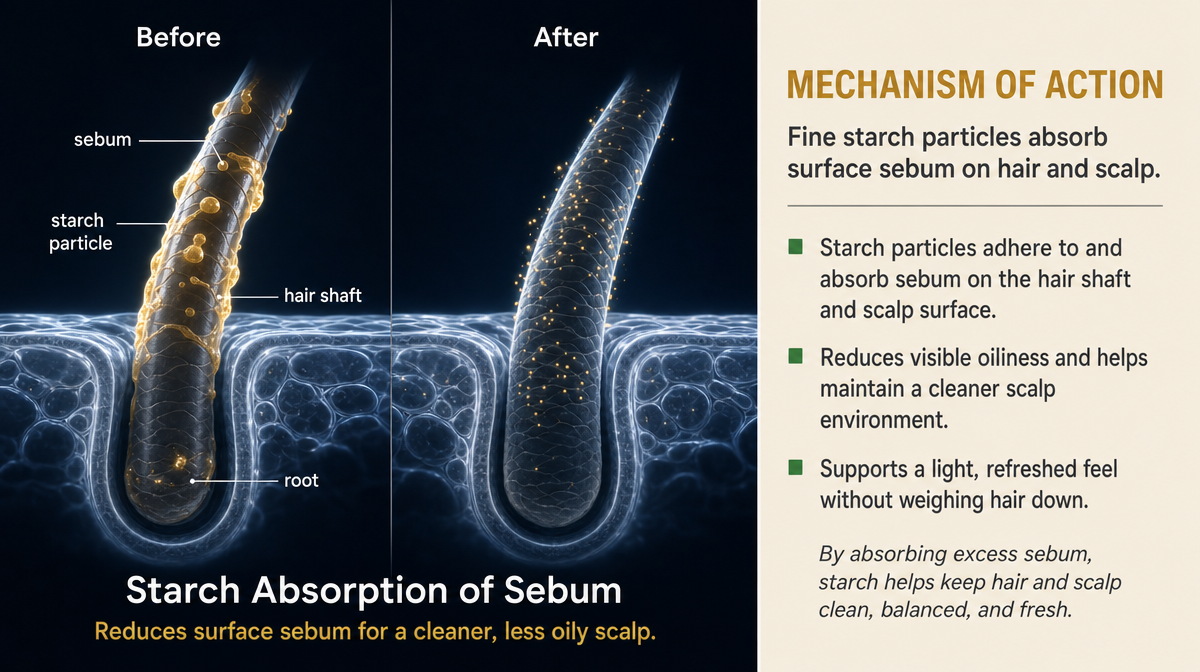
Dry shampoo is a fine powder, usually a starch such as rice or tapioca, or a clay such as kaolin, suspended in an aerosol or loose form. It works the same way flour works when sprinkled on an oily frying pan: it soaks up the grease sitting on the surface, but the pan still needs a wipe afterward. Sprayed near the roots, the powder binds to sebum on the scalp and upper hair shaft, which makes hair look and feel less oily within minutes.
What it does not do is clean anything. It does not remove sweat residue, styling product film, or the sebum itself once it is absorbed. A 2019 review in the International Journal of Trichology noted that dry shampoo can visibly reduce the appearance of oiliness and restore some volume, but has no cleansing action on the scalp itself, and residue can accumulate if it is not brushed out or periodically washed away.
This matters because most disappointment with dry shampoo comes from treating it like a substitute for washing rather than a temporary cosmetic fix. It buys a day, sometimes two. It does not reset the scalp.
The Five-minute Method That Actually Works
Shake the can well, then hold it roughly 15 to 20 centimetres from the scalp, never pressed against it. Section the hair the way a stylist would for colour: at the crown, along the part, and behind the ears where oil tends to show first.
Spray in short bursts directly at the roots, not down the lengths. Then stop and wait. This is the step almost everyone skips: the powder needs three to five minutes to actually absorb oil before it can be worked in. Spraying and immediately brushing just moves wet-looking powder around.
Once it has sat, use fingertips to massage it into the scalp, then brush from root to end with a natural-bristle or boar brush, which distributes the product and any leftover oil more evenly than a plastic paddle brush.
Self-test while reading: run a finger along your part line right now. If it feels tacky rather than dry, that is exactly where the next application should be concentrated, not sprayed evenly over the whole head.
Powder, Aerosol Or Foam: What The Format Really Changes
The format changes how evenly the product disperses, not much else. Loose powder, applied with a brush or through a fine-mesh applicator, gives the most control but takes longer and can feel messy for a beginner. Aerosols disperse fast and evenly, which is why most people start there, though the propellant can leave a cooler, sometimes tacky feel until it is worked in. Foam versions distribute cleanly but need to be rubbed in immediately, since they can look wet if left to sit too long.
Think of it like table salt versus coarse rock salt scattered on an icy step: the fine grains cover the surface evenly and do their job quietly, while coarser material clumps in one spot and looks obvious until it is spread around. Particle fineness, not the marketing language on the can, is what determines whether a product disappears into the hair or sits visibly on top of it.
Tinted versions, matched loosely to blonde, brunette or dark shades, exist mainly to reduce the white cast on visible roots and are worth the extra step for anyone with dark hair, rather than a genuine formulation difference.
Fixing The White Cast Without Washing It Out
The chalky cast that gives dry shampoo away almost always comes from two things: spraying too close to the scalp, and not giving the powder enough time before brushing.
If a cast has already appeared, resist the urge to spray more to try to blend it. Instead, work it in with dry fingertips first, then use a blow dryer on the cool setting for ten to fifteen seconds over the area, which helps disperse the fine particles into the hair rather than leaving them sitting on the surface. A brush pass afterward finishes the job.
For dark or very light hair, a shade-matched formula reduces this problem before it starts, since a plain white powder was always designed with lighter, warmer tones in mind. Applying at night before bed and sleeping on it, so the product has hours rather than minutes to settle and be redistributed by the pillow, is a trick many hairstylists mention and one that works for genuinely stubborn cases.
More product is rarely the fix for a visible cast. Time and friction usually are.
How Long You Can Honestly Stretch A Wash
There is no universal number of days, whatever a product label implies. Scalp oil production is driven by genetics, hormones, activity level and even climate, and dry shampoo does not slow that production. It only delays the moment oil becomes visible.
Fine, straight hair tends to show oil fastest, since sebum travels down a smooth shaft quickly. Coarse or curly hair can visibly hide oil longer, because the natural bends in the strand slow that same movement. Someone who exercises daily will generally need to wash more often than someone with a sedentary week, regardless of hair type.
General public guidance from the Canadian Dermatology Association on scalp care notes that washing frequency should be based on individual oil production and scalp comfort rather than a fixed schedule, which lines up with what stylists see in the chair every day. Two people with identical hair length can have entirely different real-world limits, one comfortable at three days, another needing a wash by the second morning.
The Scalp Mistakes That Build Up Over Months
A single skipped wash rarely causes a problem. The habit of relying on dry shampoo for a week or more at a time is where issues start.
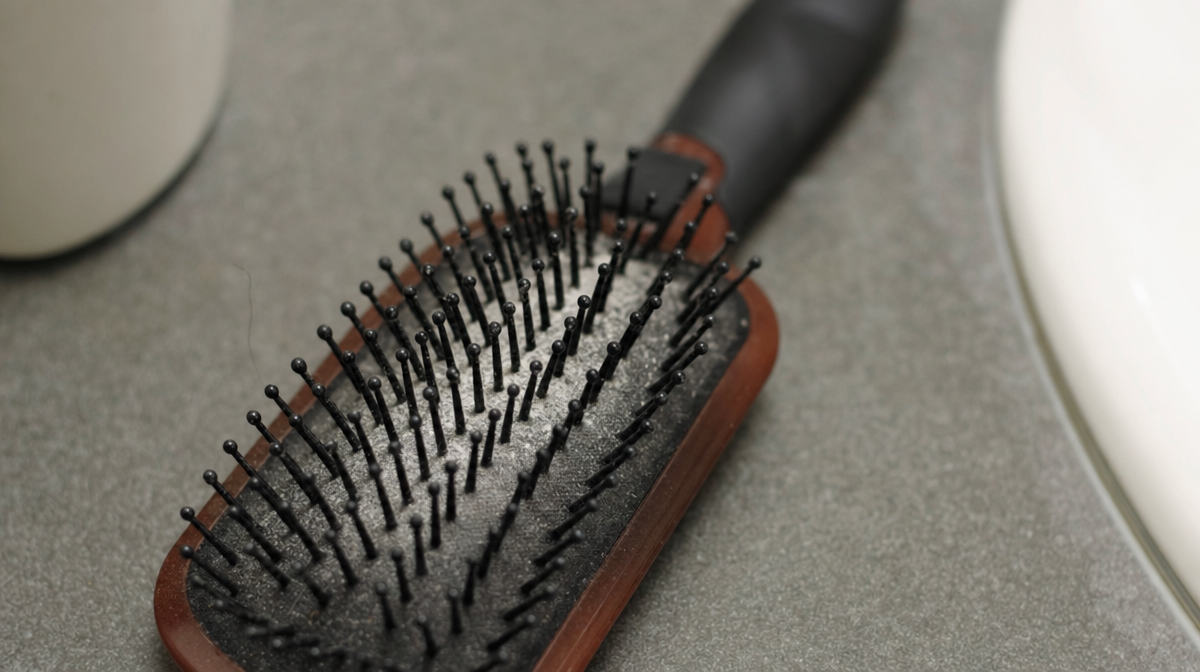
Because the powder absorbs oil rather than removing it, repeated applications without a proper wash can leave a layer of starch, sebum and dead skin cells sitting on the scalp. Some dermatological literature has linked heavy, prolonged buildup of this kind to scalp itchiness, flaking that can mimic dandruff, and in some reported cases mild folliculitis, inflammation around hair follicles that may follow clogged pores. These are described as possible contributing factors rather than guaranteed outcomes, and results vary by scalp type and hygiene habits generally.
A practical rule that stylists often repeat: dry shampoo should fill the gaps between washes, not replace them for more than two or three days running. Alternating with a full wash, including a gentle scalp massage to loosen buildup, keeps the method useful rather than something the scalp eventually rebels against.
Reading A Dry Shampoo Label Without Falling For The Marketing
Terms like detoxifying, clarifying technology or scalp reset sound clinical but describe nothing measurable. What actually matters is further down the ingredient list: whether the base is a starch such as rice, tapioca or oat, or a clay such as kaolin, and whether alcohol appears near the top of the list, since alcohol-heavy aerosols can dry out the scalp with frequent use, especially for anyone already prone to flaking.
Fragrance load is worth a glance too. A heavily scented formula can mask the fact that a wash is overdue rather than genuinely address it, which brings a reader back to the buildup problem in the previous section.
Beauty desks at Canadian magazines have spent years teaching readers to look past claims and toward listed ingredients, a habit that Quebec’s own consumer-testing tradition, built around independent lab comparisons rather than brand claims, has long modelled for the rest of the country. The same instinct applies here: read past the front of the can before deciding what actually belongs in a routine.
Key Takeaways
- Dry shampoo absorbs oil, it does not clean the scalp, so brushing out and waiting a few minutes both matter.
- Apply in light layers at the roots and part line, never saturating one spot.
- A visible white cast is fixed with fingertips and cool airflow, not with more product.
- How long a wash can stretch depends on hair type and activity level, not a number on the label.
- Relying on it for more than two or three days running can lead to buildup and scalp discomfort over time.
- Ingredient lists tell you more than words like detox or clarifying ever will.
A Quick Checklist Before Your Next Application
- Shake the can and hold it at least 15 centimetres from the scalp.
- Section hair and target the crown, part line and behind the ears first.
- Wait three to five minutes before brushing it through.
- Use a natural-bristle brush to distribute residue evenly.
- If dark-haired, consider a shade-matched formula to limit white cast.
- Plan a full wash within two to three days of first use.
This article is intended for general information and does not replace personalized advice from a dermatologist or hairstylist.
Individual results vary depending on hair type, scalp condition and activity level.