
Priya Nakamura, Staff Writer.
You are standing at the mirror with four half-used cream blushes lined up on the counter, and none of them look quite like they did in the store. One turned orange by noon. One sits in the creases by your nose. One looked perfect on your friend and strange on you. So you pick up your phone and type the question most people eventually ask: what actually makes a cream blush good, and how do you tell before you buy it.
Here is one fact worth knowing before anything else: cream blush pigment is suspended in oils and waxes, not in the talc or mica that powder formulas use as a carrier. That single difference explains almost everything else about how cream blush behaves on skin, from how little you need to how it shifts colour over the course of a day. Once you understand that mechanism, reading a label and judging a formula gets much easier.
This guide walks through the mechanics, the mistakes, and the self-tests that let you judge any cream blush on its merits, no matter what the packaging promises.
- Cream pigment rides in an oil-and-wax matrix, not powder binders, so a pea-sized amount covers more skin than the compact suggests.
- Undertone matching outperforms colour-name matching, and daylight testing beats store lighting almost every time.
- Oxidation and fallout are predictable from the ingredient list, not from marketing language like \
- buildable\
- or \
- glow-inducing.\
The Mechanical Difference Between Cream And Powder
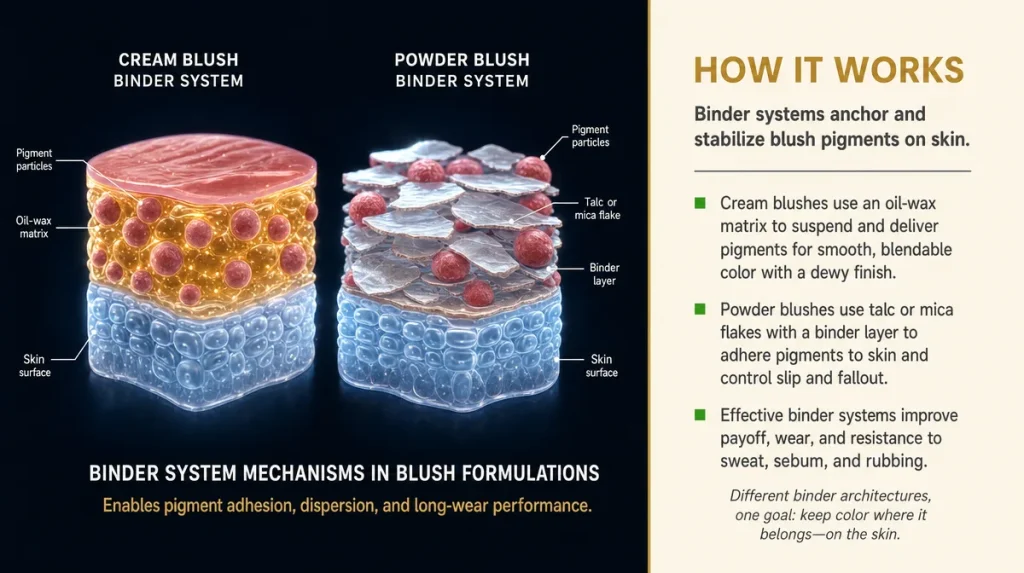
Powder blush holds its pigment in a dry binder, usually talc or mica, pressed into a pan. Cream blush does the opposite: pigment particles float in a matrix of oils, waxes, or silicones that stays semi-liquid at skin temperature.
Think of icing on a cake versus icing sugar dusted over a plate of cookies. The icing clings, spreads thin, and holds its shape against warmth. The dusted sugar sits on the surface and can be brushed away. Cream blush behaves like the icing: it bonds to the skin’s own oils, which is why a small amount travels further than it looks like it should, and why it tends to last through a humid afternoon better than powder does.
This also explains why cream formulas feel different from brand to brand even when the shade looks similar in the pan. The ratio of oil to wax to pigment determines whether a cream blush feels slippery and blends for a long time, or sets quickly and locks in place. Neither is wrong, but each suits a different skin type and a different hand.
Finding Your Undertone In Daylight
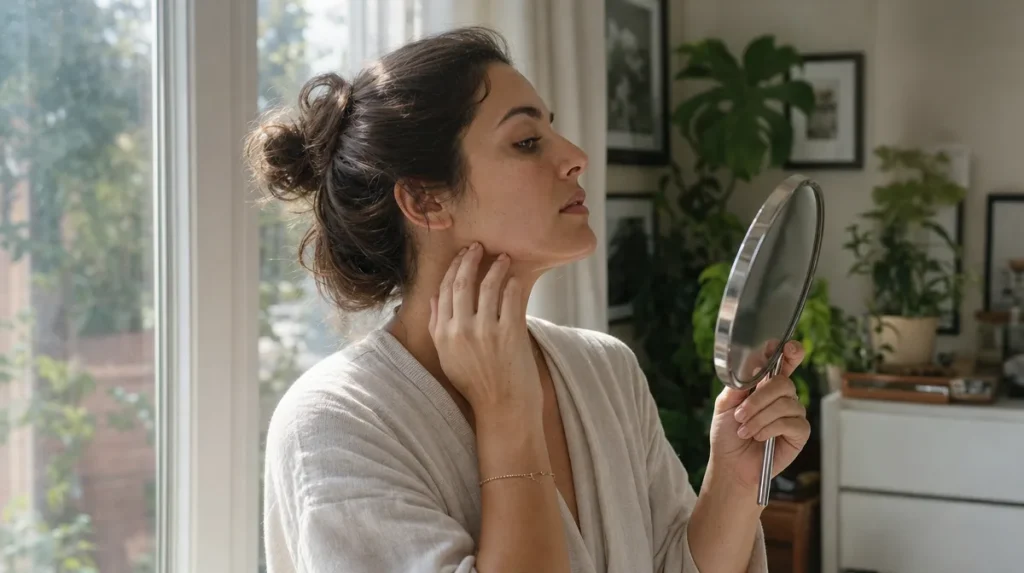
Store lighting is almost always warm-toned fluorescent or cool-toned LED, and both distort how a blush shade reads against your skin. A 2019 study in the Journal of Cosmetic Science found that indoor lighting temperature can shift the perceived hue of a cosmetic swatch by a noticeable margin compared with daylight.
The fix is simple. Apply a small amount to the back of your hand or your jawline, then step outside or stand next to a window for thirty seconds before deciding. Daylight is the most neutral light source most people have regular access to.
The wrist-vein test, where you check whether your veins look blue or green, is a popular shortcut, but it is unreliable on its own because vein colour depends on skin thickness and lighting too. Use it as one data point, not the whole answer. A more useful habit: notice which metals look better against your skin. Those who look better in silver jewellery usually lean cool or neutral, and those who look better in gold usually lean warm. Pair that observation with the daylight swatch test, and your undertone becomes much easier to pin down.
Reading The Ingredient List Without Being Fooled By The Label
Marketing copy on cream blush tends to repeat a short list of words: buildable, skin-like finish, glow-inducing, weightless. None of these are regulated terms, and none tell you anything about performance on their own.
What actually matters sits further down the ingredient list. Emollients like isododecane, dimethicone, or plant oils determine how the product glides and how long it stays workable before setting. Waxes such as beeswax or synthetic alternatives control how firm the product feels and how well it resists transferring onto a mask or collar. The pigments themselves, usually iron oxides, are the same family of colourants used across cosmetics generally, and their grade affects how true the colour stays over several hours.
\
The Pea-sized Rule And Why More Product Rarely Helps
The most common mistake with cream blush is simple: using too much at once. Because the pigment is suspended in oil rather than dry powder, a dab the size of a pea is usually enough for both cheeks.
A second mistake is applying cold product straight from a cool bathroom onto skin. Warming a dot of product between two fingertips for a few seconds softens the wax enough to blend evenly, instead of leaving streaks that take extra rubbing to fix, which in turn removes the glow the formula was designed to leave behind.
Fingers tend to work better than brushes for cream formulas, because skin warmth helps melt the product into a thin, even layer, while a dry brush can grab unevenly and create patchy edges. If you prefer a brush, choose a dense, slightly damp one and work in small circular motions rather than dragging it in straight lines.
A quick self-test: tap your compact once with a clean finger. If a visible dome of product transfers, you have more than enough for one cheek. If nothing visible shows, warm the surface with two taps instead of pressing harder.
Judging Finish And Understanding Oxidation
Cream blush finishes generally fall into three categories: dewy, satin, and matte. Dewy formulas carry more oil and reflect more light, which suits drier skin but can look greasy on oily skin by midday. Satin sits between the two and tends to be the most forgiving across skin types. Matte cream formulas exist but are less common, since the format’s appeal is usually the natural sheen.
Oxidation is a separate issue from finish. Some iron oxide pigments react gradually with the skin’s natural oils and pH, which can shift a shade warmer or deeper over several hours. This is a chemical reality, not a flaw unique to cheaper formulas, though higher oil content can accelerate the shift.
To judge this before committing to a full face of product, apply a small amount to your inner wrist and check it again after two to three hours of normal activity. If the colour has shifted noticeably, expect the same on your cheeks, and consider sizing down to a lighter shade than you think you need.
Matching Formula To Your Skin Type
Dry skin generally does better with oil- and wax-rich cream formulas, which sit into fine dry patches less than lighter, more volatile bases. Oily skin tends to do better with silicone-forward or gel-cream formulas, which set faster and resist sliding by early afternoon.
Acne-prone skin needs a closer look at the ingredient list for heavier plant oils and waxes that sit high on comedogenic ingredient charts, though reactions vary a great deal between individuals, and no ingredient is universally safe or unsafe for every complexion.
Mature skin faces a specific tension: dewy, oil-rich formulas can look beautiful but may settle visibly into expression lines by midday, while heavier wax-based formulas can sit on top of texture rather than blending into it. A thin layer of a satin-finish formula, applied with warmed fingertips and pressed rather than rubbed into place, tends to perform best for this skin type.
Packaging, Hygiene, And How Long A Cream Blush Should Last
Cream blush comes in jars, twist-up sticks, and squeeze tubes, and the format affects hygiene more than people realize. Jars require repeated finger contact, which introduces bacteria over time and can shorten how long the product stays usable. Sticks and tubes limit that contact and generally hold up longer once opened.
Most cosmetic packaging carries a small jar-shaped symbol with a number followed by \
When It Is Time To Replace A Cream Blush
Performance, not just time, is the better signal for when to let a cream blush go. A formula that has started to separate, with small beads of oil pooling on the surface, is breaking down and will apply unevenly no matter how carefully you blend it.
A shift in smell is another clear sign. Cosmetic preservative systems are designed to hold off microbial growth for a defined window, and a sour or altered scent usually means that window has closed, even if the product still looks fine.
Finally, pay attention to how the product feels against your skin. If a blush that once blended in ten seconds now takes thirty and still looks patchy, the wax and oil ratio has likely shifted through repeated temperature changes in a bathroom cabinet. At that point, the formula is working against you rather than for you, and no amount of technique will fix it.
Key Takeaways
Cream blush is an oil-and-wax system, not a dry powder one, and that single fact explains most of its behaviour. A small amount goes further than the compact suggests. Undertone, checked in daylight, matters more than the shade name on the packaging. Oxidation is predictable from the ingredient list, not from marketing claims. Finish should match skin type rather than trend. And hygiene, shelf life, and honest signs of spoilage matter more than most people realize once a jar has been open for months.
A Quick Checklist Before You Buy
- Test the shade on your jawline in daylight, not store lighting
- Start with a pea-sized amount and build if needed
- Warm the product between fingertips before applying
- Check your inner wrist after two to three hours for oxidation shift
- Choose dewy, satin, or matte based on your skin type, not what looked best on someone else
- Note the PAO symbol and track roughly how long the jar has been open
- Watch for separation, scent change, or longer blending time as signs to replace it
This article is general information and does not replace advice from a qualified dermatologist or physician.
Individual results and skin reactions vary, and what suits one person’s skin may not suit another’s.