
Kevin Whitfield, Features Reporter.
You know the moment. It is 2 p.m., you catch your reflection in the elevator mirror, and the foundation that looked seamless at 8 a.m. has settled into every line around your nose and gone patchy at the jaw. You go home and count the half-used bottles on your shelf: the one that oxidized orange by noon, the one that never set, the one that looked flawless in the store mirror and cracked by lunch. You start typing into your phone: why does my foundation not last, why does it look cakey by afternoon, what am I doing wrong.
Here is the useful fact most people never hear: long-wear liquid foundations rely on film-forming polymers, the same family of ingredients used in some hair sprays, that dry into a thin, flexible plastic-like layer on the skin. That layer is what resists sweat and transfer. But a film only lasts as long as the surface underneath it stays stable, and most of the mistakes people make with these formulas have nothing to do with the foundation itself. They happen before and after it goes on.
This guide walks through where long-wear foundation actually fails, in plain terms, so you can judge your own routine instead of guessing at a new bottle.
- Most wear failure starts before the foundation touches skin: an unstable base, not a weak formula, is usually why coverage breaks down by midday.
- More product does not mean more staying power: long-wear formulas are built to be applied thin, and layering on extra often speeds up creasing.
- How you remove it matters as much as how you apply it: stripping a film-forming formula with the wrong method can leave skin drier and more reactive, undermining wear the next day too.
Why The Skin Underneath Decides The Outcome
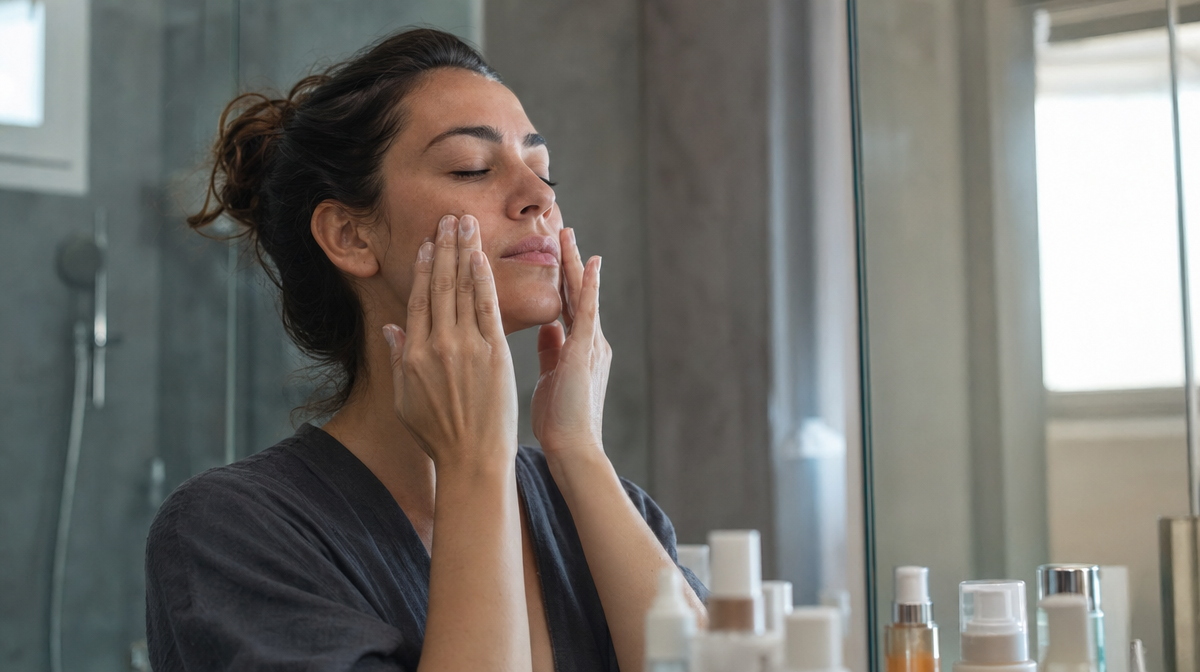
Think of long-wear foundation like paint on a wall. Fresh paint can look perfect for an afternoon even over flaking plaster, but by the next day it starts to lift and crack exactly where the surface underneath was uneven. Skin works the same way with film-forming formulas.
If skin is dehydrated, flaking, or has active oil in certain zones, the polymer film will dry unevenly across that terrain. It clings to dry patches, slides on oily ones, and the result is the blotchy, settled look most people blame on the foundation itself.
A 2023 study in the Journal of Cosmetic Science found that skin hydration levels measured before makeup application correlated more strongly with perceived wear time at eight hours than the specific formula type used. In other words, the canvas mattered more than the paint.
The fix is not complicated, but it is often skipped: moisturize, let the product fully absorb for a few minutes, and only then apply a very thin layer of primer if you use one. Rushing this step is the single most common reason long-wear foundation underperforms.
Finding Your Undertone In Daylight
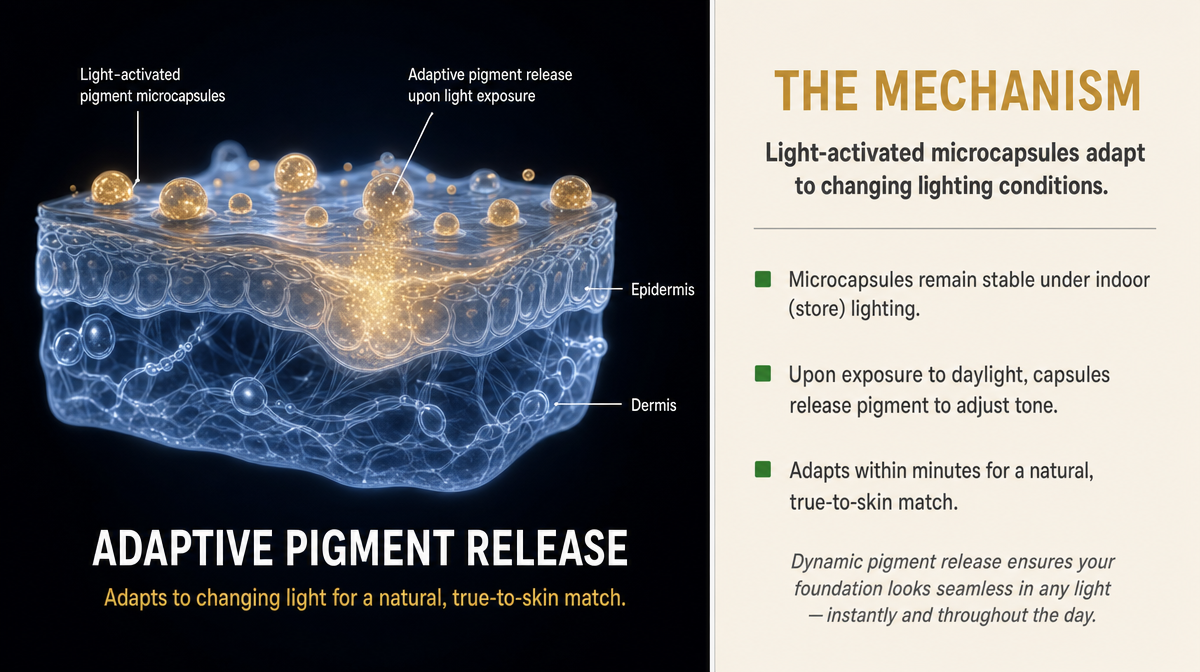
Store lighting and phone cameras both distort colour, usually pushing shades warmer or greyer than they actually read. This is why a shade that looked right under fluorescent lights at a counter can look chalky or orange the moment you step outside.
The reliable method: apply a small amount along the jawline in natural window light, away from direct sun, and let it sit for a full two minutes before judging. Oxidation, the chemical shift some formulas undergo as they meet air and skin oils, happens in that window. A shade that looks correct at second zero can shift a full half-tone darker by minute three.
Self-test while reading this: next time you try a new bottle, set a timer for two minutes after application and only then check the mirror. If the colour has visibly shifted, that tells you something about how that formula will behave all day, not just at application.
Most people judge a shade the instant it goes on and never revisit it, which is backwards. The judgment that matters is the one two minutes later, and again at the four-hour mark.
Applying Less Than Feels Right
Long-wear formulas are engineered to be thin. The polymer film that gives these products their staying power is designed to sit as a fine, even layer, closer in thickness to a coat of nail polish than a coat of paint.
When people apply the amount they are used to from a lighter, dewier foundation, the film ends up too thick to flex with the face. It cracks along expression lines by early afternoon, particularly around the mouth and eyes, simply because a thicker film has less give.
The practical method: start with roughly half the amount you think you need, applied with a damp sponge rather than a brush or fingers, which naturally limits how much product deposits and presses it into skin rather than sitting on top of it. Build coverage only where genuinely needed, such as around the nose or a blemish, rather than across the whole face a second time.
This is one of the more counterintuitive mistakes, because it feels like using less product should mean less coverage. In practice, a thin, even film covers more evenly and cracks less than a thick one, which is why the visible coverage often looks better with less product, not more.
Setting Powder: The Difference Between Locking In And Drying Out
Setting powder absorbs surface oil and helps hold the foundation film in place, but it works by drawing moisture away from the top layer of skin. Used with a light hand in the right zones, this is exactly what long-wear formulas need. Used heavily across the whole face, it can leave the film brittle rather than flexible.
The distinction that matters is where oil actually breaks through, usually the centre of the forehead, the nose, and the chin, rather than the whole face uniformly. Pressing powder only into those zones with a small, dense brush, and skipping it on the cheeks and under the eyes where skin tends to be drier, preserves the flexibility the film needs to move with expression.
A common mistake is applying powder immediately after foundation, before the film has had a chance to set on its own. Waiting sixty to ninety seconds allows the initial evaporation of water and lightweight solvents to happen first, so the powder is locking in a film that has already begun stabilizing rather than fighting a wet layer.
Over-powdering is easy to spot later in the day: it shows up as a flat, dry-looking texture that emphasizes fine lines rather than smoothing them, which is the opposite of what long-wear coverage is meant to do.
What Marketing Claims On The Label Actually Mean
Terms like 24-hour wear or transfer-resistant describe controlled laboratory conditions, typically a set temperature and humidity with minimal touching or friction, not a full day of talking, eating, mask-wearing, or humid transit commutes. These claims are not false, but they describe a best-case scenario.
What matters more than the number on the box is the finish type and how it is described: matte finishes generally resist oil breakthrough longer but can look drier on textured or mature skin, while satin or natural finishes tend to look more comfortable through the day but show shine sooner in the T-zone. Neither is objectively better, but knowing which trade-off a formula is making helps set realistic expectations before the first wear.
It also helps to separate wear time from transfer resistance. A foundation can stay visually intact on the skin for hours while still transferring onto a collar or a mask, because those are two different mechanisms: one is about the film holding together, the other is about how tacky that film remains to the touch.
Reading a label with this distinction in mind is more useful than chasing the highest hour count printed on the front.
Judging Results Honestly, And When To Judge Them
The fairest test of any long-wear foundation is not the mirror check at noon, it is the four-hour and eight-hour marks, taken under the lighting and activity level of a normal day rather than a still, air-conditioned bathroom.
At four hours, look specifically at the zones most prone to breakdown: around the nostrils, the inner corners of the eyes, and along a smile line. Slight softening in these areas is normal and expected even from a well-performing formula. Widespread patchiness across the cheeks or forehead by that point usually points back to skin prep rather than the product.
At eight hours, the more useful question is not whether the foundation looks identical to application, almost none do, but whether it still looks like skin rather than separating into visible patches of colour and shine. A formula that fades evenly is behaving normally. One that breaks apart unevenly is telling you something about either the prep or the amount applied, and the earlier sections in this guide are the place to look first.
Giving a formula a fair three-to-five-day trial, adjusting one variable at a time, prep, amount, or setting method, gives a far more reliable read than judging from a single wear.
Removing It Without Undoing The Next Day’s Wear
Film-forming polymers are built to resist water and light friction, which is precisely why they can be harder to remove than they are to apply. Scrubbing with a washcloth or rubbing repeatedly with a cotton pad can create micro-friction on the skin’s surface, and the Canadian Dermatology Association’s general public guidance on cleansing routinely notes that repeated mechanical friction is a common, avoidable contributor to irritation for those with sensitive or reactive skin.
The more reliable approach is a two-step removal: an oil-based or balm cleanser first, massaged gently to break down the film chemically rather than physically, followed by a gentle water-based cleanser to remove any residue. This limits the friction needed and tends to leave the skin barrier in better shape by morning.
Skin that is removed roughly overnight, after overnight, tends to be more reactive and uneven the next day, which circles back to the very first section of this guide: unstable skin is where wear problems begin. Gentle removal tonight is part of what makes tomorrow’s application behave better.
Key Takeaways
Long-wear foundation rarely fails because of the formula alone. It fails at the seams: skin that was not properly hydrated, a shade judged too quickly, too much product applied out of habit, powder used indiscriminately rather than where oil actually breaks through, and removal that is rushed at the end of the day. Fix the seams and most formulas perform closer to their label promise.
A Quick Pre-application Checklist
- Moisturize and wait a few minutes before any makeup step
- Test shade on the jawline in daylight and wait two full minutes before judging colour
- Apply with a damp sponge, starting with about half the amount you think you need
- Wait sixty to ninety seconds before setting powder
- Powder only the zones that actually get oily, not the whole face
- Judge wear honestly at the four-hour and eight-hour marks, not at application
- Remove with an oil-based cleanser first, then a gentle water-based one, without heavy scrubbing
This article is general information and does not replace advice from a dermatologist or skincare professional.
Individual skin type, climate, and product formulation all affect results, so wear time and outcomes will vary.